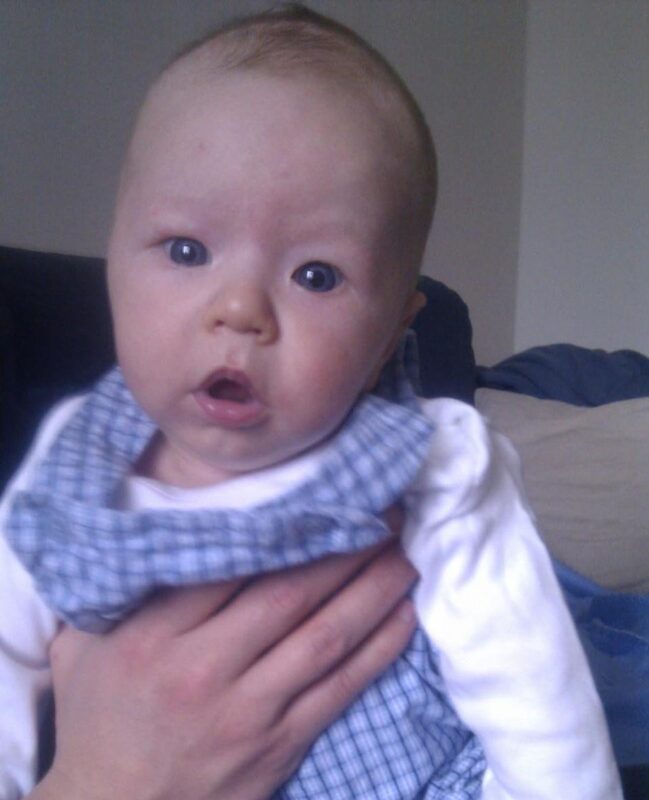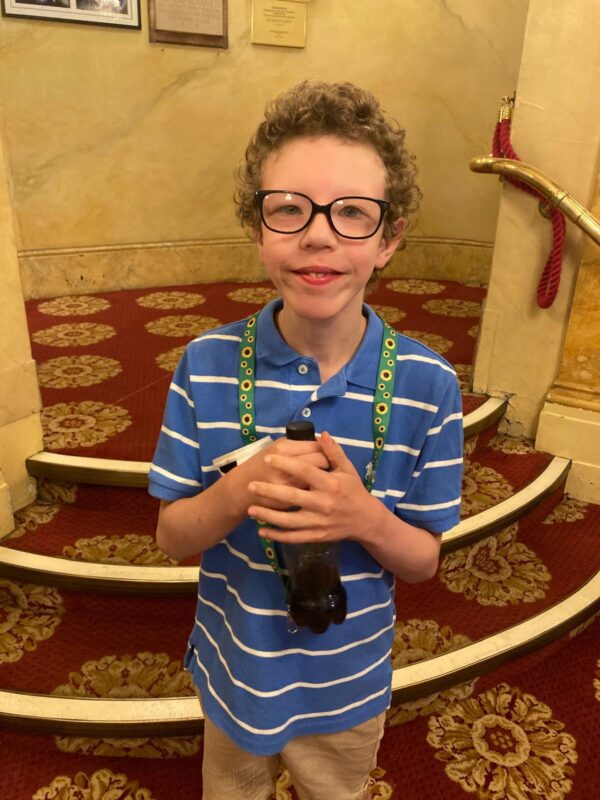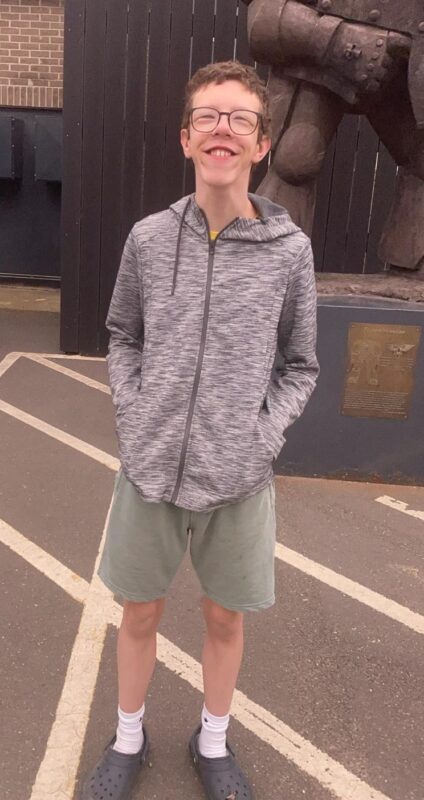
My child was diagnosed with Williams Syndrome aged 20 months. Prior to this we had an arduous journey to diagnosis. We struggled with feeding, struggled with sleep, struggled with mobility and gross motor skills. He was a floppy baby, got sick frequently and cried, cried for hours on end and seemed to be in pain. We had several GP appointments and health checks that tried to reassure me, but deep down I knew something was amiss. At 9 months old I got a physio to show me exercises so I could get him to sit up. I knew something was wrong, but had no clue what?
Fortunately, with my job I had private health insurance for him and took him privately to see a paediatrician which started the ball rolling towards a genetic analysis and screening. At 20 months following a microarray genetic screen we were told he had Williams Syndrome. The paediatrician handed me a piece of paper from Great Ormond St that listed out all the complications and told me to go home and Google it, she had never heard of it. I remember putting my son into the car seat after this appointment and thinking that he is a completely different child and I am not equipped or able to care for him. The next day I took him to our GP who again had never heard of Williams syndrome and told me to go home and “make nice memories”. This is a shockingly frightening position to be in as a parent. The professionals that you rely on to guide you through any medical crisis had never heard of the condition that your child has.
My son was referred to Great Ormond St hospital which started the ball rolling with heart scans kidney scans, hearing and eye examination and a genetics appointment. The genetics team mentioned the Williams Syndrome Foundation, and we haven’t looked back.
They provided us with a new growth chart for children, as they are usually much smaller than typical children for weight and height and guidelines for the medical mgt of children with WS. This has been an invaluable resource for parents like us and our community paediatricians, as it takes the ambiguity of how frequently scan and blood tests need to be conducted. We were very fortunate with GPs and paediatricians who have acknowledged that we are the experts on WS, going to conventions and immersed in the condition and that they would be lead by us. I initially found this overwhelming, but with the support of the WSF I knew what I should be requesting for my child, and I had approachable and helpful medical staff that did their best to ease the journey for me, through the system.
Once a diagnosis came, interventions came and a myriad of appointments. My son got speech therapy, words started to come, slowly. We had physio and he got fitted for specialist (piedro) boots and 2 months later he took his first steps. We were away! He was making progress!! I stopped myself thinking about the future and just focused on the day to day with our little man. I shut out WS, and just wanted to try and focus on us as a family and get our heads around a new journey and a very different and unexpected plan for us.
He started at nursery, at 9 months old as I returned to work. We still didn’t know that there was something wrong. So, he just went along with all the other babies, eating what they ate. But he was bringing up food after every meal. We now know that was the texture and low muscle tone, that impacts swallow. His fantastic key worker in nursery would take spare changes of clothes to work!
He started in a mainstream school with 121 support. Interventions and executions of plans were patchy, teaching assistants, whilst all very much well meaning, weren’t trained and didn’t understand the nuances of WS. One of the most valuable resources we got from the WSF was access to Dr Jo Van Herwegan who did rigorous assessments on my son in the free EHCP clinics she runs out of UCL. She has worked with countless children with WS over the years, knows their strengths, weakness and nuisances inside out and makes recommendations for support in school. It was really informative for TA’s and teachers. Jo conducted 2 of these assessments, over a few years so we could pin point progress and again the weaknesses were very clear. The comparison between the 2 documents is very powerful and articulated my sons difficulty better than I ever could.
Our kids are so engaging, and verbally strong, that they are deceptive creatures. Differentiation of curriculum became less and less, all the while the gap grew wider. We were refused a special needs school for him, so had to embark on the traumatic journey of tribunals and expert witnesses, to prove that his needs were greater and more complex that the LA were documenting. Thankfully after almost a year wait in the tribunal system, we had our hearing and were successful. Again, Dr Jo’s assessments were crucial in this hearing process too. My son has thrived in the right environment, getting the appropriate inputs and support and no longer feels “dumb” or “different”. The staff are so knowledgeable and proactive, wanting to learn and know more about Williams Syndrome. It was so reassuring and I knew they understood the depth of his issues and that things would be ok.
As a family we know first hand of the isolation, the crippling anxiety of attending appointments and realising you have to be the expert on this and you are completely and utterly unqualified to do this. But you know your kid, you have a gut instinct that is rarely wrong. I think we have a tendency to second guess ourselves, but we know when something is off. We have tried to do as much as we can to raise awareness of WS in the medical field. My son has been signed up in GOSH as a candidate for paediatrician exams and has done this 2 -3 times now, seeing 12 paediatricians at time! He is very compliant and likes to feedback his own thoughts to the examiner!
The lead consultant was very proactive also and brought in a bunch of year 5 medical students from UCL, to get them to examine my son, and had a little crash course on WS. We hope that seeing and meeting someone with WS will stay in their minds!
As I write this, I find it difficult to go back there, to the endless sleepless nights, the memories of knowing deep down something wasn’t right, but I just couldn’t find out what. The hours I spent on the internet late at night googling symptoms, the dismissive responses from medical staff. Trying to hold down jobs. Seeing everyone else’s baby thrive and we were in this limbo land, just surviving day to day. It was a horrible time and I know this is a feeling most of my friends with a child with Williams Syndrome will feel, but we fail to talk about it. I think it’s an important message to tell newly diagnosed, young families. It really does get better, whether that’s us changing, or growing in confidence or acceptance, it does improve. It is a super tough road though, and its ok to feel 100% overwhelmed. But we do need to stop ourselves every one in awhile to look back and see how far we have come, both our kids and ourselves!